Passive income is income generated with minimal effort or ongoing involvement. It’s a goal for many looking to build wealth and achieve financial independence. Two popular methods of generating passive income are dividend investing and rental properties. In this blog, we’ll delve into both strategies, exploring how they work, their benefits, and considerations for getting started. Dividend Investing: Generating Income from Stocks Dividend investing involves purchasing stocks of companies that pay dividends—regular payments made to shareholders from the company’s profits. Here’s how to approach dividend investing: 1. Selecting Dividend-Paying Stocks Focus on Dividend History : Look for companies with a consistent track record of paying and increasing dividends over time. Dividend Yield : Compare dividend yields (annual dividend income divided by the stock price) across different stocks to assess potential income. 2. Dividend Reinvestment Plans (DRIPs) Compound Returns : Reinvest d...
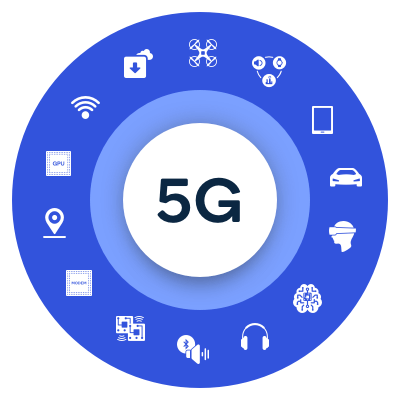
In the realm of telecommunications, the advent of 5G technology marks a significant leap forward, promising to revolutionize connectivity in ways that will impact communication, IoT devices, and mobile experiences. As we delve into the capabilities and implications of 5G networks, we uncover a landscape poised for unprecedented innovation and efficiency.
Understanding 5G Technology
5G, or fifth-generation wireless technology, represents the next evolution in mobile networks, succeeding 4G LTE. It promises significantly faster data speeds, lower latency, and greater capacity, enabling a multitude of applications beyond traditional mobile communications.
1. Speed and Latency Advancements
5G networks boast blazing-fast speeds, capable of reaching up to 10 Gbps (gigabits per second), surpassing the capabilities of its predecessors by several orders of magnitude. This speed enhancement translates into instantaneous downloads, seamless streaming of high-definition content, and ultra-responsive gaming experiences.
Moreover, 5G dramatically reduces latency—the delay between sending and receiving data—which is crucial for real-time applications like video conferencing, online gaming, and autonomous vehicles. With latency reduced to milliseconds, interactions become more fluid and responsive, enhancing user experiences across the board.
2. Impact on Communication
The implications of 5G on communication are profound. Beyond faster downloads and clearer voice calls, 5G enables new communication paradigms. Enhanced mobile broadband (eMBB) allows for high-definition video conferencing and immersive virtual reality experiences without lag or buffering. This capability is particularly transformative for remote work, telemedicine, and interactive learning environments.
3. Revolutionizing IoT Devices
The Internet of Things (IoT) ecosystem stands to benefit immensely from 5G technology. With its ability to support a vast number of connected devices simultaneously, 5G enables seamless integration and communication between IoT devices. This capability is critical for smart cities, smart homes, industrial automation, and precision agriculture, where real-time data exchange and decision-making are paramount.
4. Enabling Innovative Applications
5G unlocks the potential for innovative applications that were previously constrained by network limitations. Augmented reality (AR) and virtual reality (VR) applications can now deliver immersive experiences with minimal latency, transforming industries such as gaming, education, and healthcare. Autonomous vehicles can rely on 5G networks for real-time navigation updates and communication with infrastructure and other vehicles, enhancing safety and efficiency.
5. Challenges and Deployment
While the benefits of 5G are immense, its widespread deployment faces challenges. Building out the infrastructure required for 5G—comprising small cells, massive MIMO (Multiple Input Multiple Output) antennas, and fiber-optic networks—requires substantial investment and regulatory approvals. Furthermore, concerns about cybersecurity, spectrum allocation, and privacy must be addressed to ensure the secure and ethical deployment of 5G technology.
Conclusion
In conclusion, 5G technology represents a paradigm shift in connectivity, promising to redefine how we communicate, interact with technology, and conduct business. By delivering unprecedented speed, ultra-low latency, and massive connectivity, 5G will unlock new possibilities across industries, driving innovation and economic growth.
As we embrace the era of 5G, it is essential to monitor its development, address challenges, and capitalize on its transformative potential responsibly. The future is bright with possibilities, and 5G technology is at the forefront of shaping a more connected and efficient world.
Comments
Post a Comment